Buying a watch
CloseHow to tell if a watch is genuine
Copies of fine watches are far better than they were. The crude fakes of twenty years ago have given way to pieces that pass a quick glance, and sometimes a careless seller. A genuine watch still gives itself away in ways a copy struggles to match, each house in its own way, and the surest protection costs nothing: knowing who you are buying from.
Published by the Links Watch Centre team
Start with the seller, not the watch
A genuine watch from a doubtful source is still a risk. Before you look at the piece, look at who is selling it: how long they have been trading, what customers say, and whether they guarantee authenticity in writing, on the invoice.
A price well below the market is a warning, not a bargain. So is pressure: a seller who will not let you take your time, examine the watch, or have it checked by a watchmaker before you pay.
What to check on any watch
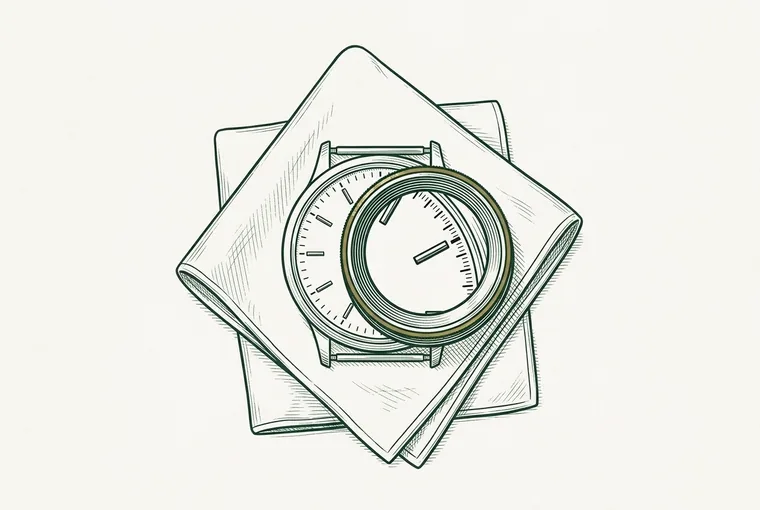
Weight and feel. A fine watch is heavy for its size, and nothing on it rattles. The crown screws down smoothly, the bezel clicks precisely, and the clasp closes with a solid feel.
Finish. Edges are crisp where brushed surfaces meet polished ones. Engravings are cut cleanly and deeply, never shallow or fuzzy. Hands are finished on their edges as well as their faces.
The dial. Under a loupe, the printing is sharp with even spacing, the luminous paint sits neatly within its outlines, and the date, where there is one, sits centred in its window. Smudged print, uneven markers or a misspelt word end the conversation.
No single feature is proof, and the better copies now pass several of these checks. It is the sum of the small things, and then the movement, that tells you.
Serial and reference numbers
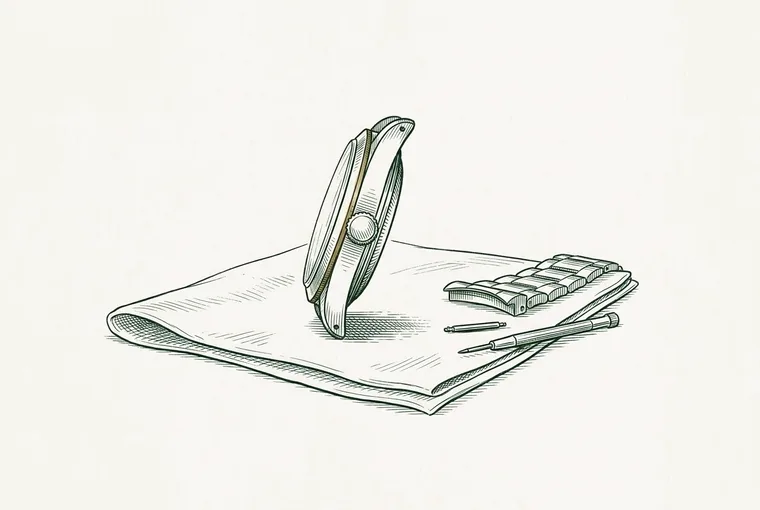
Every fine watch carries a reference number, which names the model, and a serial number, which belongs to that watch alone. Both should be engraved crisply, and both should agree with the model, the dial and any papers. Where they sit varies from house to house, as the next section shows.
A number looked up online can tell you roughly when many watches were made, though Rolex stopped numbering in date order in 2010 and runs no public checker. What a number cannot do is prove the watch is genuine: a copy can carry a real number taken from a genuine piece. The same number appearing on several listings is a sign something is wrong.
House by house
Rolex. On modern pieces the serial is engraved on the inner ring between the dial and the crystal; before 2005 it sat between the lugs at six o'clock, with the reference at twelve. The date magnifier enlarges two and a half times, the seconds hand sweeps eight steps a second, and the small crown etched into the crystal at six o'clock is copied now: a check, not a proof.
Tudor. Its cases long followed Rolex practice, so older pieces carry the serial between the lugs at six o'clock and the reference at twelve; current ones engrave both under the lugs. The shield has been the dial emblem since 1969; the rose belongs to vintage pieces, and to the crown.
Omega. The serial sits on the back of a lug or the outside of the case back on recent pieces, and inside the case or on the movement on older ones, and it should match the warranty card. A Master Chronometer watch comes with a card whose test results the owner can see on Omega's own website.
Patek Philippe. Every Patek carries two numbers, one on the movement and a case number inside the case back, both recorded in the house's archives. Movements made since 2009 carry the Patek Philippe Seal, earlier ones the Geneva Seal. Most modern pieces show the movement through a sapphire back, and it should look like a Patek: finished by hand, never flat.
Audemars Piguet. On a Royal Oak the eight hexagonal bezel screws are real screws, fixed from the back, so they sit flush and aligned; copies often leave them crooked or purely decorative. The tapisserie pattern on the dial should be crisp and even to its edge, and the serial and reference are engraved on the case back.
Cartier. The word Cartier is printed, minutely, inside one of the Roman numerals, most often the VII and on some models the X, and reads cleanly under a loupe. The numerals keep a shape the house has used for decades, the minute track is a fine railway, and the crown carries a cabochon. Not every model has the hidden signature, and the best copies attempt it, so judge the whole dial.
Vacheron Constantin. The Maltese cross is the emblem, on the dial, the crown and the movement, and it should be sharply formed. Many movements carry the Hallmark of Geneva beside it. The house has kept its registers since 1755 and can confirm an older piece from its numbers.
Jaeger-LeCoultre. The house has made its own movements since 1833, so the movement is the place to look: finely striped bridges, polished bevels, neat engraving. The reference and serial sit on the case back, or on the plain reverse of a Reverso, which is often personalised. Its archives, too, can confirm an older piece.
The movement is the final word
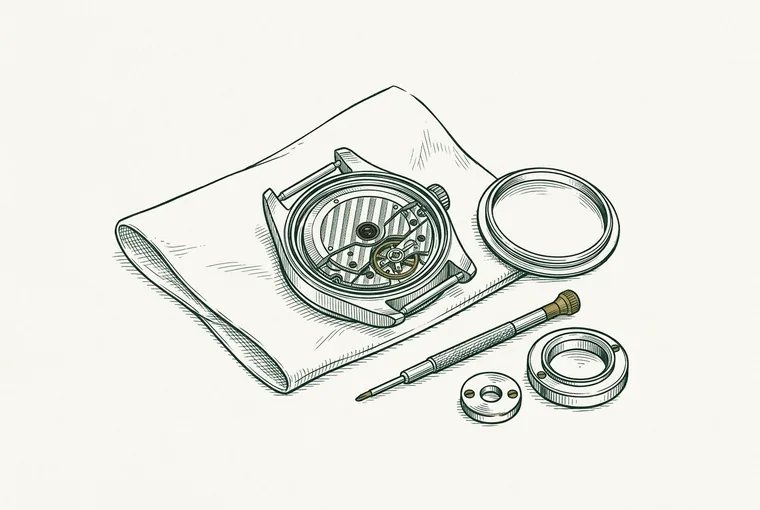
The surest test is inside. A watchmaker opening the case back sees at once whether the movement is the right calibre for the reference, finished as the maker finishes it, and marked as it should be. Some houses show the movement through a sapphire back, and so do many copies, so it is the finishing and the markings that count, not the glass.
Without opening it, watch the seconds hand. A mechanical movement sweeps in small, quick steps, several a second. A hand that jumps once a second on a watch that should be mechanical is a warning, though a smooth sweep on its own proves little, since the better copies manage it too.
A few genuine watches are quartz, such as the Rolex Oysterquartz made from 1977 to 2001 and many Cartier models, so know the model before you judge.
Papers, boxes and the makers' archives
Warranty cards and certificates are copied, and genuine boxes and papers are sold on their own and paired with other watches. Papers raise confidence; they do not prove anything by themselves.
Check that the serial and reference on the card match the watch exactly, that the dealer's stamp and date make sense for the piece, and that the card is of the style the maker used that year. For some watches, mainly the most sought-after modern references, box and papers add noticeably to the price; for many others they make little difference.
For an older piece, Patek Philippe, Audemars Piguet, Vacheron Constantin and Jaeger-LeCoultre will issue an extract from their archives from the watch's numbers, confirming what was made and when. It takes weeks, and for a Patek the case must be opened to read both numbers. Patek says plainly that an extract is not proof of authenticity: it shows that a genuine watch with those numbers was made, not that this is it.
Genuine, but not original
The most dangerous piece for a buyer paying a full price is not a copy but a genuine watch that has been altered: a refinished dial, a replaced bezel, diamonds added after it left the factory, or a movement that belongs to another watch, sometimes sold with papers from another watch altogether.
On a vintage piece some parts are honestly replaced over the decades, and that is acceptable when it is disclosed to you and reflected in the price. It becomes a problem when it is hidden, so ask directly whether every part is original, and have the answer written on the invoice.
At Links Watch Centre
Every watch we sell is checked before it is displayed: the serial and reference numbers, the warranty card when there is one and that it matches the watch, the box, the dial including whether any diamonds on it are original, and the parts down to the crystal, with the case back opened and the movement confirmed. You are welcome to watch it being done.
We guarantee that every piece we sell is genuine: if a piece is ever shown not to be authentic, we refund the full price paid, provided it has not been tampered with or altered since the sale. If anything on a watch is not original, we tell you before you buy.
If you are buying elsewhere, or already own a watch you would like looked at, bring it to our shop in Yateem Centre or send photographs on WhatsApp first. We tell you what we can see from the photographs and what needs the watch in hand.
Questions
Can you tell a copy from photographs?
Often, but not always. Photographs show the dial, printing, case and engravings well enough to spot many copies. The best copies, and the movement, need the watch in hand.
Does a serial number check prove a watch is genuine?
No. At most it tells you roughly when that number was made. A copy can carry a genuine number, so the watch itself, and its movement, are the proof.
Will the brand tell me whether my watch is genuine?
Not from a photograph or a phone call. Their service centres will tell you the truth when the watch comes in for service, some houses will issue an archive extract for an older piece, and a good watchmaker or dealer can tell you sooner.
Must a watch with box and papers be genuine?
No. Papers and boxes are copied and also sold separately. Check that the serial on the card matches the watch, and judge the watch first.
This guide reflects what we see at the bench and common practice among watchmakers and dealers. The details for each house are as the makers publish them and vary by model and year. The checks here narrow the field; they do not settle it. A watch is judged in hand, by a watchmaker or a dealer you trust, since a brand's own boutique may decline to examine a watch it did not sell. It is general information, not a judgement on any particular watch.
Also at the shop
Come and see us
- Address
- Yateem Centre, Building 71
Road 341, Block 304, Shop 2
Manama, Kingdom of Bahrain - Opening hours
- Saturday to Thursday, 4 to 8pm
Closed Friday · Please message us before you visit - +973 3661 1900
- Find us
- Open in Google Maps