Watch care
CloseHow often should a watch be serviced?
Most of the great Swiss houses now advise a full service somewhere between five and ten years, depending on the brand, the model and how the watch is worn. Rolex says approximately every ten years; Omega, every five to eight. Worn every day through Bahrain's summers, or in the sea, a watch is wiser to see sooner, and a vintage piece sooner still.
Published by the Links Watch Centre team
What the makers say
Rolex recommends a service approximately every ten years, depending on the model and how the watch is actually worn, and gives watches bought new from 1 July 2015 a five-year international guarantee. Tudor followed with five years of its own in 2020.
Omega recommends a complete service every five to eight years for most of its mechanical watches, and also guarantees them for five years.
Patek Philippe extended its international warranty from two to five years for new watches sold from 1 May 2024, and the Patek Philippe Seal pledges to service, repair or restore every watch the house has made since its foundation in 1839.
Cartier and Jaeger-LeCoultre extend their warranty to eight years in all when a watch is registered on Cartier Care or the Jaeger-LeCoultre Care programme while its original warranty is still running.
Audemars Piguet's international warranty, like most, does not cover work done by anyone other than its boutiques, authorised dealers or authorised service centres.
For other houses, follow the guidance in the booklet that came with the watch. As a rule, the more complicated the watch, the sooner it asks for attention.
What a service really is
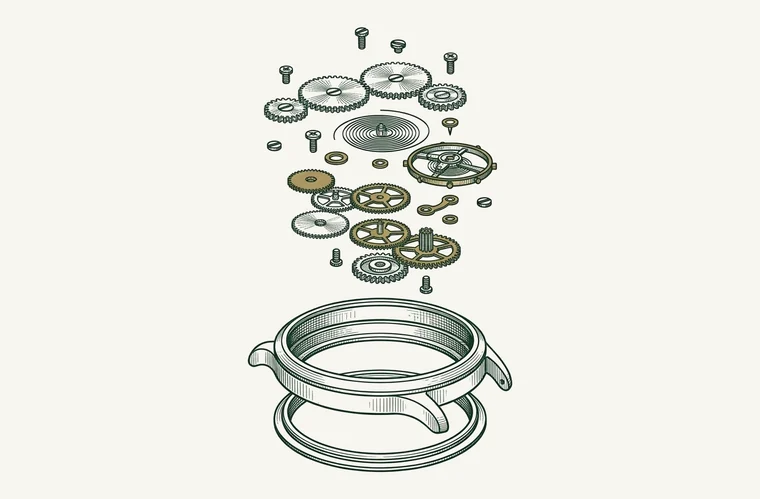
Inside the case, a mechanical movement is a small world of wheels, springs and jewels, kept turning by a few drops of oil. Over the years that oil thickens and dries, the seals that keep water out harden, and the smallest parts begin to wear against one another.
A full service takes the movement apart, cleans every part, replaces what is worn, oils it afresh, regulates it and closes the case again with new seals. The watch keeps time as it should and is sealed once more. A quartz watch needs a new battery every few years, and in time it too benefits from a full service. It is care rather than repair: done in good time, it is what allows a fine watch to be handed down.
Why life in Bahrain shortens the interval
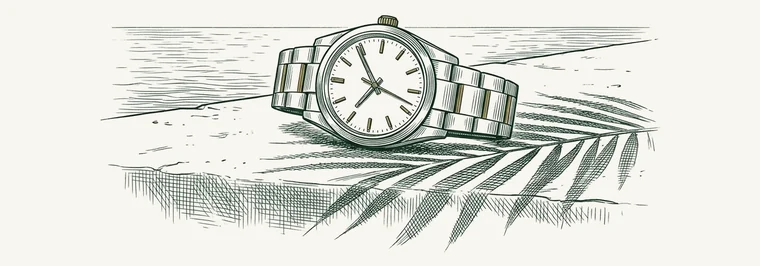
Heat, humidity and perspiration are hard on seals. A watch that goes from an air-conditioned room into the summer sun, or into the sea or a pool, asks more of them than one that lives under a cuff in a mild climate. Water resistance is not permanent: it depends on those seals, and they age.
So for a watch worn every day here, many independent watchmakers would rather see it before the maker's longest figure than after. A piece kept for occasions can stay closer to it. Vintage pieces, with older lubricants and more delicate parts, are best seen every few years.
The delicate parts, house by house
Chronographs, such as the Rolex Daytona, the Omega Speedmaster or a Royal Oak chronograph. The chronograph hands sit on very fine pivots. They must be lifted without touching the dial and set back exactly at zero, so that each one returns precisely when the chronograph is reset.
Integrated bracelets, as on the Audemars Piguet Royal Oak and the Patek Philippe Nautilus. Brushed and polished surfaces meet at sharp, narrow bevels. Refinishing them well is slow, exacting work; done carelessly, it rounds those edges for good.
The Cartier Santos. Its screws are part of the design, so every one must be turned without leaving a mark.
Complications, such as perpetual calendars and moon phases. They must be handled and set with care, in the right order, or the mechanism can be strained.
Stone dials, cut from onyx, lapis lazuli or malachite. They are thin slices of natural stone: they cannot be refinished, and a crack means a new dial, so they are handled with particular care.
Vintage lacquer dials. The layers of lacquer and print on dials from past decades can loosen, crack or flake with age, and moisture hastens it. They are cleaned only by careful hands and never refinished unless the owner wishes, because an original dial carries much of a vintage watch's value. Old luminous paint on hands and dials is treated the same way: protected and left original, not replaced.
Signs it should not wait
It gains or loses noticeably more than it used to.
It stops sooner after you take it off than it once did.
The crown feels gritty when you wind it, or the date changes at the wrong hour.
There is mist under the crystal. Have it seen the same day: moisture inside does harm quickly.
It has taken a hard knock, or something moves inside when it should not.
Between services
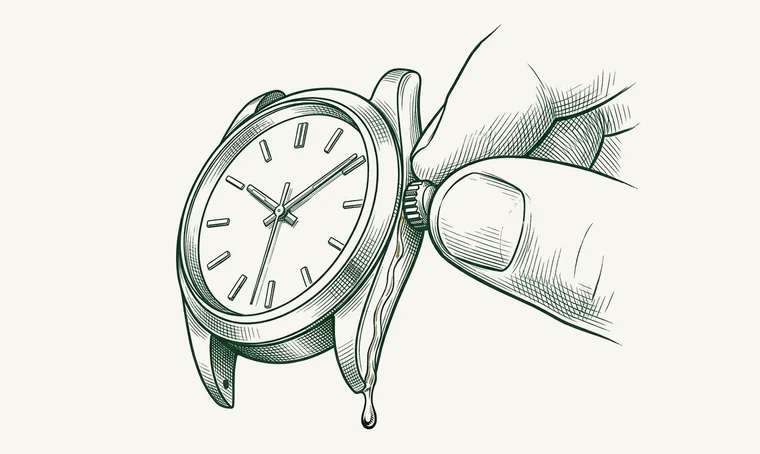
Keep the crown screwed down whenever the watch may meet water, and never turn the crown or press the pushers underwater. After the sea or a pool, rinse the watch in fresh water. Keep it away from strong magnets, such as speakers, magnetic phone cases and bag clasps.
If you swim with it, a water resistance test every year or two costs little and protects a great deal.
An official service centre, or an independent workshop?
If your watch is still within its maker's guarantee, take it to the brand's own service network: that is how the guarantee stays valid. Once the guarantee has ended, the choice is yours. Official service carries the brand's own guarantee; a good independent workshop offers the same careful work, closer to home.
Wherever you go, look for the same things: a clear explanation and a price before any work begins, the right tools, a water resistance test when you ask for one, and a written guarantee on the work.
At Links Watch Centre
We work on Rolex, Tudor, Patek Philippe, Audemars Piguet, Omega, Cartier, Vacheron Constantin and Jaeger-LeCoultre, among most other brands. Bring the watch to our shop in Yateem Centre, or send photographs on WhatsApp first. We look at it, tell you what it needs and what it will cost, and begin only when you approve. A typical service takes three to four days, longer when parts have to be ordered, and a tracking link shows you where your watch is until it is ready.
Questions
How often should a Rolex be serviced?
Rolex recommends approximately every ten years, depending on the model and how the watch is worn. Worn every day here, or in the sea, sooner is wiser.
Does a watch need servicing if it keeps good time?
Yes, in time. Good timekeeping says little about the oil and seals inside, and by the time a watch runs badly, worn parts may already need replacing. Follow the interval, not only the timekeeping.
Will an independent service affect my watch's guarantee?
While the maker's guarantee is running, use the brand's own service network to keep it valid. Once it has ended, the choice is yours.
How long does a service take at Links Watch Centre?
A typical service takes three to four days. When parts have to be ordered it takes longer, and we tell you the expected date before we start.
Sources: the makers' published guidance and warranty terms, from Rolex (through Official Rolex Jewellers), Tudor, Omega, Patek Philippe, Cartier Care, the Jaeger-LeCoultre Care programme and Audemars Piguet's international warranty. The advice on daily wear, vintage pieces and delicate parts reflects common independent watchmaking practice and our own experience at the bench.
Also at the shop
Come and see us
- Address
- Yateem Centre, Building 71
Road 341, Block 304, Shop 2
Manama, Kingdom of Bahrain - Opening hours
- Saturday to Thursday, 4 to 8pm
Closed Friday - +973 3661 1900
- [email protected]
- Find us
- Open in Google Maps